
Summary – Walking is not just one activity. Different types of walking have different benefits depending on your goals. This article explains the difference between daily step walking, fitness walking, social walking, treadmill desk walking and trekking. It also discusses how walking can improve health, fitness, body weight and long-term wellbeing, while showing how to use each type of walking more effectively.
Most people think walking is just walking. You either do it or you don’t. However, within health and fitness there are actually several distinct types of walking, each with different benefits.
*************
What is Basic Walking (Daily Steps)?
This is simply the amount you move throughout everyday life. It is the walking you do getting to work, walking around and all general movement. Most phones measure this automatically.
Steps have declined massively in recent years, especially since lockdown with home working, online shopping and food delivery all increasing. There is a direct relationship between how much you move and controlling your body weight.
What is Fitness Walking (Hills & Inclines)?
Walking for fitness is slightly different to daily steps. For someone who is very sedentary, any walking, even on the flat is enough to improve fitness. However, as you become fitter you will need to find a hill or an incline treadmill. While Olympic walkers walk at 4 min/km (speed 15 on a treadmill) most people find flat walking annoying.
Walking uphill raises your heart rate without the impact of running and allows almost anyone to get a proper aerobic workout. This is why I often encourage clients who can’t run or hate running to use a hill or treadmill incline.
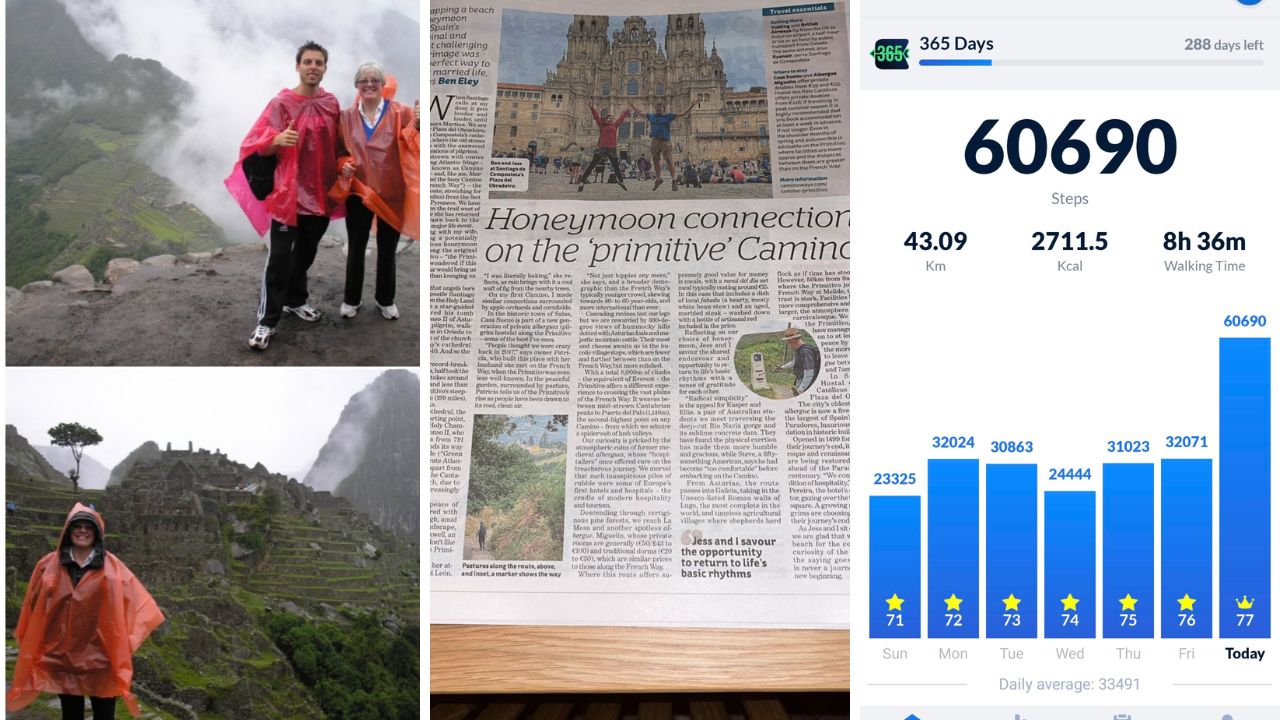
Years ago I used to measure my mum’s fitness by how long it took us to walk from the back gate of our house to the top of Dinas Brân Castle in Llangollen. If she was slower than fifty minutes, I would tell her she needed to step things up. Before we went to Peru to walk Machu Picchu, she got that down to 36 minutes.
People often underestimate just how fit hill walking can make you. One thing to remember is that your body naturally slows down when you reach an incline. That is perfectly normal, but if your goal is fitness you still need to consciously walking faster up the hill to raise your heart rate.
What is Social Walking?
Walking is also one of the easiest ways to become more social. Instead of always meeting friends for coffee, lunch or a drink, why not go for a walk together? Conversation often flows more naturally when you are walking side by side, you get some fresh air and before you know it you have accumulated several thousand extra steps without really thinking about it. I think everyone should make walking part of their social life.
Can You Walk while You Work?
Standing desks and treadmill desks have become increasingly popular over the last few years but it hasn’t really taken off. The research on them is very encouraging, but most people are doing it wrong. They are walking far too quickly.
The studies behind treadmill desk work had people walk at a very very slow pace. This means the walking would be barely noticeable and thus would not interfere with work, or thinking nor make a noise if on a call. Doing slow walking for 4 to 5 hours would mean you have walked 10km by the end which is a long way. The aim was to move way below normal walking pace which was still much better than sitting down.
What is Trekking?
Walking can also become the event itself. Some people enjoy an afternoon exploring the countryside. Others spend days completing famous routes such as the Camino de Santiago in Spain or walking sections of the South West Coast Path. There are also charity events such as the Moon Walk, where thousands of people walk a marathon through the night to raise money for breast cancer research.
I have had clients complete all sorts of walking challenges over the years, from hiking holidays to preparing for Machu Picchu. Walking can become an adventure as much as exercise.
What Type of Walking is Best For You?
The biggest confusion around walking is assuming all of these types give the same benefits.
Daily steps are most closely linked to general health and weight management. There is definitely a relationship between how much you move and how strict your nutrition needs to be. The lowest step counts I have seen while clients were still losing body fat were around 7,000 steps a day, but their food choices were excellent. On the other hand, if someone is consistently walking 20,000 steps a day and still not losing weight, it is almost certainly their food that needs addressing.
One area that is often overlooked is walking endurance. Everyone has a point where they simply become tired from walking. You may not be out of breath, but your feet, legs or lower back begin to complain. As you increase the amount you can comfortably walk in a day, something interesting happens. Your body naturally raises the amount of movement it is happy doing every day.
If 10,000 steps leaves you exhausted, it is no surprise you have days where you only manage 2,000. If you gradually become comfortable walking 20,000 steps, your normal daily movement will increase without you consciously trying.
It is also worth remembering that daily steps and fitness walking are not the same thing. I have found I can happily stroll along at a 12-minute kilometre pace for three hours without thinking much about it. Speed me up towards 10-minute kilometres and after about an hour I am ready to stop. The purpose of daily steps is simply to move. The purpose of fitness walking is to raise your heart rate. They do not need to happen at the same time.
As a rough guide, 10,000 steps is around 7 kilometres for the average person, with most people accumulating around 7,000 steps per hour of walking. However, everyone’s stride length is different. I remember walking with my mum and she reached 10,000 steps while I was only on around 6,000 despite us covering exactly the same route.
What Does This Mean For You?
Walking is one of the most underrated forms of exercise because people often treat it as one activity. In reality, different types of walking have different purposes. Some improve your fitness, some increase your daily movement, some help you socialise and others simply allow you to explore the world.
Rather than asking yourself, “Should I walk more?” perhaps ask yourself, “Which type of walking would improve my life the most?” The answer will probably be different depending on your goals, but almost everyone would benefit from doing a little more of at least one of them.
Key Takeaways
- Walking is not one activity; different types of walking have different benefits.
- Daily steps are most closely linked with increasing movement and helping manage body weight.
- Hill walking or incline walking is a much better way to improve fitness than simply walking faster on the flat.
- Social walking makes exercise easier to maintain and combines movement with spending time with others.
- Slow treadmill desk walking can reduce sitting time without affecting work.
- Trekking turns walking into an adventure and can become an enjoyable long-term fitness goal.
- Match the type of walking to your goal rather than assuming all walking produces the same results.
Frequently Asked Questions
How many steps should I walk each day?
There is no perfect number, but increasing your average daily steps is generally beneficial for health and weight management.
Is walking enough to improve fitness?
For beginners, yes. As you become fitter, hill walking or treadmill inclines are usually needed to raise your heart rate enough for further improvements.
Is hill walking better than walking on the flat?
If your goal is cardiovascular fitness, hills generally provide a much greater training effect while remaining low impact.
Can walking help with weight loss?
Yes. Walking increases daily energy expenditure and allows many people to manage body weight more easily, although nutrition still plays a major role.
Is walking on a treadmill desk effective?
Research suggests very slow treadmill desk walking can reduce sitting time and increase daily movement without greatly affecting work performance.
Is walking enough on its own?
Walking is an excellent foundation, but combining it with some strength training provides the greatest long-term health benefits.
Photo – Walking with my mum in Machu Picchu, my travel journalist client Ben Eley’s article on his trekking honeymoon and my best step day ever –
Need Support Getting In Shape?
Changing your body on your own without support or an effective system usually ends in failure sadly. To avoid this outcome you can become one of my coaching clients either online or in person. I provide Holistic, Healthy & Sustainable Body Transformations. Contact me to discuss your goals further or see below for more details and the options available to you based on your location / preferences:
Worldwide (Online) –
For transformations, coaching and support wherever you are in the world read more here>>>>
London (Battersea) – If looking for Personal Training Battersea please contact me. I am available for sessions in homes, private gyms or Personal Training Battersea Park. To see my locations please visit my Battersea Personal Trainer page>>
London (Oval / Kennington) – For Personal Training in Oval & Kennington please contact me. I am available for sessions in homes, private gyms or parks.
**************
Read My Book – The Grand Unified Theory of Weight Loss – My latest book is available in print, kindle/ebook and audio formats. You can read more about it and see where it is available here>>>
Follow Me – You can get more great advice, tips, hacks and more by following me on one of my social media channels. Follow Me>>>
Instagram>> You Tube>> Facebook>> Twitter>> Tik Tok>> My Weekly Newsletter>>
**************