Most people think their issue with eating is the diet. In reality it is the way they behave around food that keeps repeating. If you understand your eating personality, you can see what actually needs fixing.
What is an eating personality?
I have always liked personality tests, not in a deep psychological way, but just as a bit of fun. I have done almost every type of test and even got a spreadsheet of my friends’ scores. I also created the Body Transformation Skills Test a few years ago, which you may have completed. It is sort of a personality test linked into my book.
These tests give you a new way of seeing patterns that are already there. Eating is exactly the same. You behave in a certain way around food and that keeps repeating. Almost like an eating personality.
Academia has sort of tried to break people into different types of eaters over the years, things like restrained eaters, emotional eaters and so on, but it never quite lands in a way people actually eat day to day. The internet selling nutrition plans has its versions too. All the identity based approaches, lion diet, bear diet, fasting types, keto people, vegan people. It is all trying to group you into an audience to sell you something.
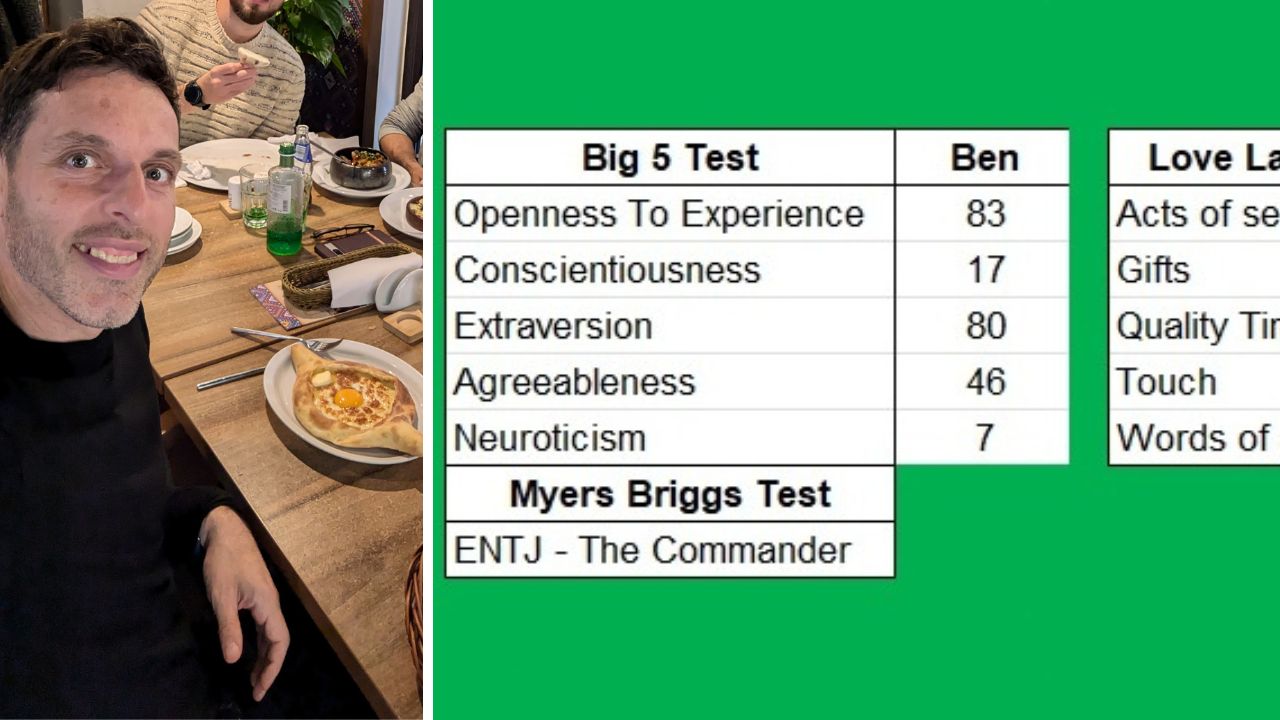
The most well known personality models (“The Big 5”, “Myers Briggs”) divides how you act into specific traits. The Big 5 for example looks at things like extroversion and agreeableness amongst others. For your eating personality, there are four main components:
What are the four components of an eating personality?
1. Eating Style
This is how you eat, some people eat little and often, others forget to eat all day and then have one big meal. Some eat very quickly, others take their time. Some always finish everything on their plate, others leave food without thinking about it. None of these are right or wrong on their own, but they can make things easier or harder.
Key takeaway:
Your eating style directly affects how easy it is to control how much you eat.
2. Energy Balance Tendencies
This is the direction you tend to drift in when you are not really trying. Some people sit around the same weight without much effort. Some slowly gain over time. Some under-eat and struggle to keep weight on. Others swing between extremes, very strict for a period, then very loose.
Key takeaway:
Most people are not bad at dieting, they just have a default direction they keep falling back into.
3. Food Focus
Some people are very health focused, others do not really think about it much at all and just eat what is there or what they feel like. Many people like structure, repetition and rules. Others are about food, variety and taste. Many people campaign on behalf of their eating style while others just keep to themselves. This area ties into your knowledge but also your emotions.
Key takeaway:
The best way of eating is the one that fits how your brain already works.
4. Emotional Eating
There are different emotions which can trigger your eating, for many this is when they are stressed, bored or fed up but it may equally be when you are happy or socialising. Another area that is often overlooked is the general emotion behind your day to day eating. Many people are suffering from guilt, fear or panic over what they are, or are not putting into their diet. The process of eating itself becomes a huge source of stress in their life.
I remember having two clients in a row where a woman was crying to me because she had eaten some chocolate, while the next guy was happily telling me about all the drink and drugs he had been taking over the weekend.
Key takeaway:
If emotions drive your eating, no diet will fix it long term.
How do you combine these into your own eating personality?
When you put all of that together, you get a much clearer picture of what is actually going on. You might be someone who skips meals, then eats quickly and finishes everything. You tend to gain weight over time, like structured diets, but get thrown off when you are stressed, bored or socialising.
There are no rights or wrongs, however, your general inclinations should point us towards what to work on if you want to improve your eating. I have seen almost every type of strategy work with clients, but it needs to fit your personality. This is especially true if you are looking at changing body composition, as reducing food will really expose areas of weakness in your eating patterns. That is usually the bit that needs fixing.
What does this mean for you?
These traits should be viewed a bit like personality tests, they point you towards areas you may want to work on and guide you on how best to structure your approach. You can change your eating personality over time. I have done this personally and with my clients.
When it comes to food behaviours, I feel the most important area for most people is the emotional side of things. This is what actually influences how you feel around food day to day. Too many people are dealing with fears, guilt and worry about what they do or do not eat. This is where the Intuitive Eating Movement came from, which we have discussed before.
If you are at the point where you know your eating could be better but you keep falling into the same patterns, that is exactly the sort of thing coaching helps with. I have helped a lot of people not just get results on the outside, but become far more at peace around their eating and nutrition habits.
Summary
- You do not have an eating problem, you have patterns that repeat
- Your eating personality is made up of style, tendencies, focus and emotion
- Most diets fail because they fight your personality
- Fat loss exposes your weakest eating behaviours
- Fix the behaviour, not just the plan
Photo – Me with a Georgian dish, I am not at all stressed around eating “bad” food, and some of my personality scores. I should make the above concept into a food based Myers Briggs equivalent –