
This article looks at how your approach to fitness should change across each decade of life. From kids building movement skills, to adults trying to stay consistent, to older ages focusing on strength and mobility, the focus shifts at each stage. The key point is that age is rarely the problem, it is usually what you are (or are not) doing.
A lot of people ask what exercise they should be doing at their age, but the answer is not fixed, it changes depending on where you are and what you have done before.
It was my birthday last month which means I am edging closer to 50 and a new age category in Hyrox, running and most competitive sports. This makes it easier to get a nice placing :). In my view, the whole idea that age ruins your fitness is massively overblown. Most people can get into the best shape of their life later on, unless you were already operating at a very high level when younger. I am running the fastest 5km times I have ever run and had the most muscle at 42.
This made me think about how exercise should look across the whole lifespan. Whether it is kids, adults, or older relatives, the approach should change at each stage of life. Here are my thoughts on what you should be doing at each age.
0-10 – How should kids be exercising? – Have a go at all and everything while having a laugh. In this modern era of sedentary living you will want your children to do as many things as possible. Avoid trying to focus them into one thing in hope of professional athlete dreams. The most important thing to learn here is that movement is great fun. Even if your kid is super fit, there is plenty of research showing that doing everything is far better than specialising at a young age.
Key takeaway: Make movement fun and varied, not structured and serious.
11-20 – What is the most important thing to learn about fitness here? – The most important years for future activity levels. For a long time, I have said schools do as much harm as good for encouraging activity in children. They should play a variety of movements and sports in the early teens and then later in the decade try some of the different exercise forms. I would say the single most important thing they could learn is that “Exercise does NOT need to hurt to make massive gains”. Youth sport often teaches the opposite of this.
Key takeaway: Build positive habits and learn that exercise does not need to be painful to work.
21-30 – What should your training actually look like? – Ideally in this decade you would find a fitness community that you enjoy hanging out in. This could be from playing a sport, doing the odd running event or becoming a regular at a certain type of class. Ideally you would put in place a routine for strength, aerobic fitness and flexibility. The more variety the better for the average person who is not competing in a sport. The most important thing to learn here is that you do not need to be “good” to get involved in group fitness and events.
Key takeaway: Find something you enjoy, ideally around other people and build a routine you can stick to.
31-50 – Why do most people go backwards here? – This period is a transitional time at both ends of the fitness spectrum. Ex-athletes will need to find the enjoyment in movement and will often have to unlearn some of the more intense techniques. Sports training methods often do not transfer over if you are not competing anymore.
For current sports participants it may also be a time to step back and remember that now is a good time to set your stall for life long benefits. This means ensuring you have a balance in your routine and not smashing the body with no consideration for the future. You may decide it is time to end full on contact sport, or add in flexibility training alongside just running or cycling hundreds of kms.
For people who have yet to start exercise then the great news is you are barely behind the rest of the population as this is the key age group where most people drop off their routines. In less than 12 months you can probably be ahead of the average person as your fitness can catch up fast!
Key takeaway: Balance your training and think long term, not just performance.
51-70 – Can you still get properly fit at this age? – The focus now should be on having a body that feels 20 to 30 years younger. You cannot actually perceive how old your body is, rather, you judge it on flexibility, strength and fitness. For almost everyone you can transform how you feel. This means you will probably need an equal focus on the different types of exercise. If you have already been exercising for a while you will have strong foundations in some or all of these areas. For people who have yet to start exercise it is amazing how quickly you can feel young, fit and energised, even if you have never liked nor done exercise previously.
Key takeaway: Focus equally on strength, fitness and mobility to feel younger.
71 – 100+ – How do you stay mobile and independent? – The marathon world record for over 90s got smashed last month by an hour and 45 minutes by a guy who started running when he was 73! While that is impressive of course, your focus here is to be mobile and independent whatever age you are. For this to happen, you will probably need a daily routine of some sort that focuses on flexibility and light strength (like these videos I did for you last year). You will also probably have to use some methods to address injuries and mobility. With these in hand, you will be surprised how little is needed to make you fitter than what life demands of you.
Key takeaway: Stay mobile, stay independent, and keep moving daily.
What This Means For You
Across all decades the message is simple:
- You can improve your fitness at any age
- What you do matters more than how old you are
- Strength, fitness and mobility all play a role
- Consistency beats intensity every time
Most people massively overestimate how much their age is holding them back, and massively underestimate how much they could change in a short space of time. The difference between feeling old and feeling fit is not decades, it is usually just a few months of doing the right things consistently. The problem is sometimes not knowing what to do, but often it is sticking to it when life gets busy. This is where coaching makes the difference, putting the right plan in place for your stage of life and making sure you actually follow it through. If you are at that point where you know you should be doing more, but have not quite got it going yet, now is the time to change that.
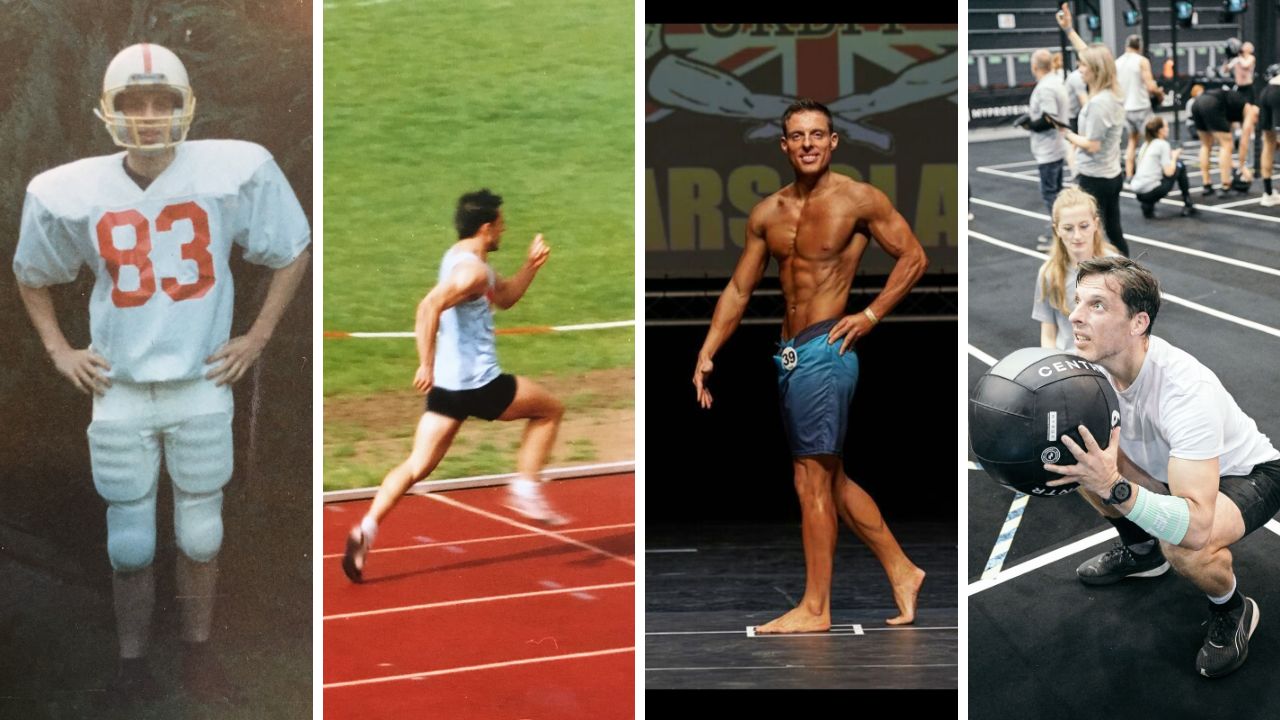
Photo – My sports through the decades, see here>>
Need Support Getting In Shape?
Changing your body on your own without support or an effective system usually ends in failure sadly. To avoid this outcome you can become one of my coaching clients either online or in person. I provide Holistic, Healthy & Sustainable Body Transformations. Contact me to discuss your goals further or see below for more details and the options available to you based on your location / preferences:
Worldwide (Online) –
For transformations, coaching and support wherever you are in the world read more here>>>>
London (Battersea) – If looking for Personal Training Battersea please contact me. I am available for sessions in homes, private gyms or Personal Training Battersea Park. To see my locations please visit my Battersea Personal Trainer page>>
London (Oval / Kennington) – For Personal Training in Oval & Kennington please contact me. I am available for sessions in homes, private gyms or parks.
**************
Read My Book – The Grand Unified Theory of Weight Loss – My latest book is available in print, kindle/ebook and audio formats. You can read more about it and see where it is available here>>>
Follow Me – You can get more great advice, tips, hacks and more by following me on one of my social media channels. Follow Me>>>
Instagram>> You Tube>> Facebook>> Twitter>> Tik Tok>> My Weekly Newsletter>>
**************